22°C
My Lombok White Duck Garden
Nestled in a tranquil stretch of rich fields, with Mount Rinjani watching over me from behind and the ocean quietly in front, my little white duck garden is where life feels simple and honest.
This is where my mornings begin – with soft light, fresh air, and the gentle chatter of ducks already awake before me.
I never planned for any of this in a grand way. I just wanted something real to care for- something that would give back in its own time.
And somehow, along the way, my ducks and I found our rhythm together. People started noticing – not because it is perfect, but because it is done with care, patience, and a lot of heart.
The Ducks I Raise
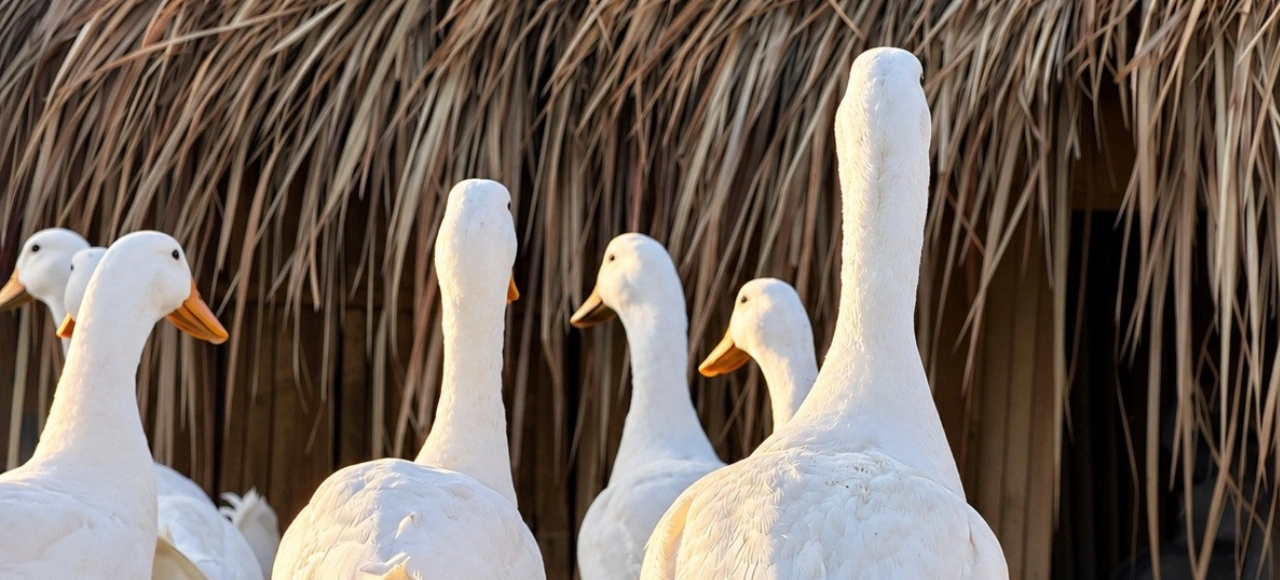
The ducks here are what we call Lombok local ducks, a beautiful mix of native Indonesian breeds, with a touch of Indian Runner elegance. They stand tall, always curious, always busy—honestly, a little bit like me.
Some are brown, some patterned, all blending so naturally into the fields that sometimes you only notice them when they move—or when they start talking (which they do, a lot).
What I love most about them:
They adapt easily, whether it’s wet season or dry
They are natural explorers, always searching for their own food
They are strong and independent
And they give the most flavorful eggs and meat
I let them live as they should. They walk, they wander, they choose their pace. No rushing, no forcing. Good things, I’ve learned, take their time.
How I Care for Them
My mornings are never rushed. I walk through the garden, sometimes talking to them (yes, I do), sometimes just watching.
I keep things simple:
Natural food—grains from nearby and whatever they happily find themselves
Space to move freely, because happy ducks are healthy ducks
Fresh, clean water – always
There is no strict system, no heavy structure. Just attention, routine, and respect.
Why ducks near the Rice Fields?
The ducks are not decoration – they are part of the farming system.
As they move through the paddies, they
> Eat insects, snails, larvae and small pests
> Remove weed seeds
> Loosen and aerate the soil
> fertilise the fields naturally with their manure
This natural cooperation improves rice growth while completely eliminating the need for chemical pesticides and artificial fertilisers.
This method is known as Rice–Duck Farming and is recognised as one of the most sustainable agricultural systems in the world.
This approach combines animal welfare, local sourcing and natural farming, while giving guests an authentic connection with Lombok’s rural life.
It is a beautiful example of how caring for animals, respecting nature and supporting local traditions can become part of a meaningful hospitality experience.
Living Sustainably, Living Fully
Here, everything connects. What the ducks leave behind feeds the soil, and the soil keeps everything growing. It is a quiet cycle, but a beautiful one.
I also share this space and knowledge with the people around me. Farming, like life, feels better when it is shared.
From Garden to Table
The Lombok duck is something special in our kitchen. Cooked slowly, with spices that tell their own story, the flavor becomes deep, rich, and comforting.
When people taste it, they often go quiet for a moment. That is my favorite part.
A Little Experience for Our Guests
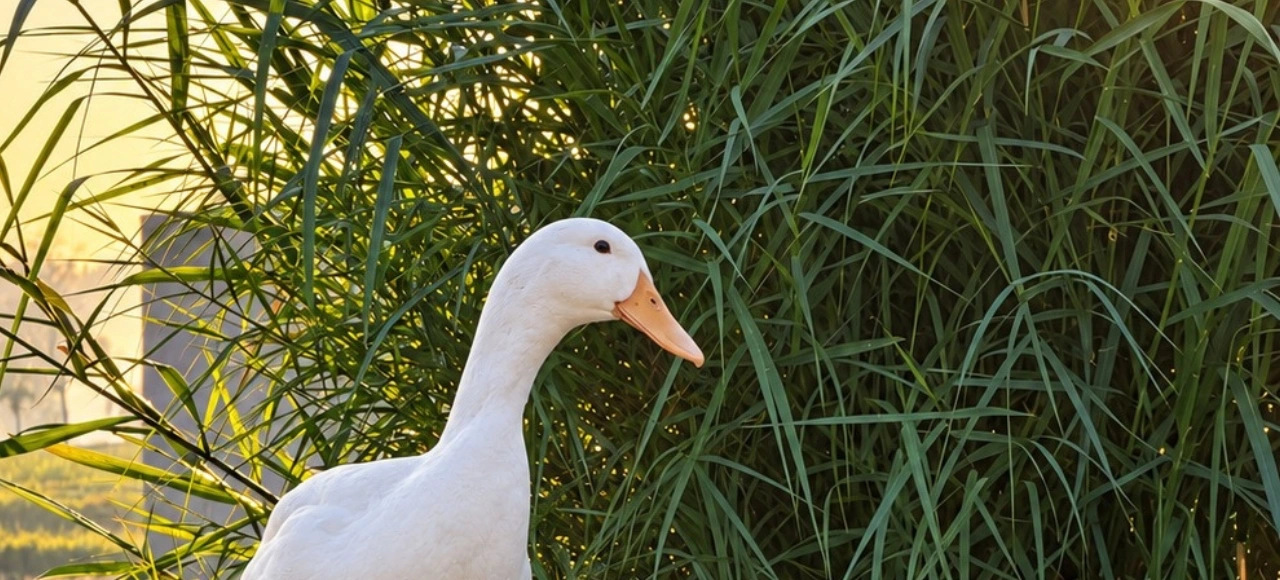
Many of our hotel guests ask me, “Can we feed the ducks?”
And the answer is – yes, of course, but gently and with a little guidance.
Feeding the ducks can be a lovely, quiet moment—especially in the morning or late afternoon when they are most active (and a bit chatty). I usually prepare the right food for them, so guests can join in without disturbing their natural diet.
It is not about throwing food or making noise—it is about slowing down, standing still for a moment, and letting the ducks come to you. Children especially love this, but adults often enjoy it just as much.
And if you listen closely, you might even hear them “talk back.”
Duck Facts & Answers (F&A)
Do ducks lay eggs?
Oh yes, and quite generously. My ducks can lay between 150 to 300 eggs a year. Their eggs are bigger than chicken eggs, with a richer taste – perfect for cooking or baking.
CAN DUCKS HEAR?
Very well! Even if you can’t see their ears, they hear everything.
Mine definitely know the sound of my footsteps – especially when food is involved.
WHAT DO DUCKS EAT?
A little bit of everything:
Rice and corn
Fresh greens
Insects and tiny water creatures
And sometimes a little extra feed
They are not picky- but they do appreciate variety.
What do you call a male, female and a baby duck?
A baby duck is called a duckling, a male duck is a drake, and a female is a hen or duck.
A group of ducks is called a raft, a team, or a paddling.
How cute is that, a paddling of ducks
Generic “bird” terms can also be used like chick, bird, or flock.
Are ducks pregnant?
No. Ducks lay eggs. After mating, the female lays fertilised eggs.
How long does it take for a duck egg to hatch?
Usually around 28 days. But like many things here, it happens in its own time.
How often do ducks lay eggs?
Almost daily during their laying season.
Do farmers keep ducks for eggs or meat?
Both. Ducks provide eggs for daily use and are later raised for meat.
Do ducks ever fly away?
No. These ducks are not migratory and remain close to their home and routine.
Do ducks damage the rice?
No. They improve soil health and help rice grow stronger.
Is this farming organic?
Yes. No chemical fertilisers or pesticides are used.
Is it good for the environment?
Very. It protects water quality, improves soil health and supports biodiversity.
How can you tell male and female ducks apart?
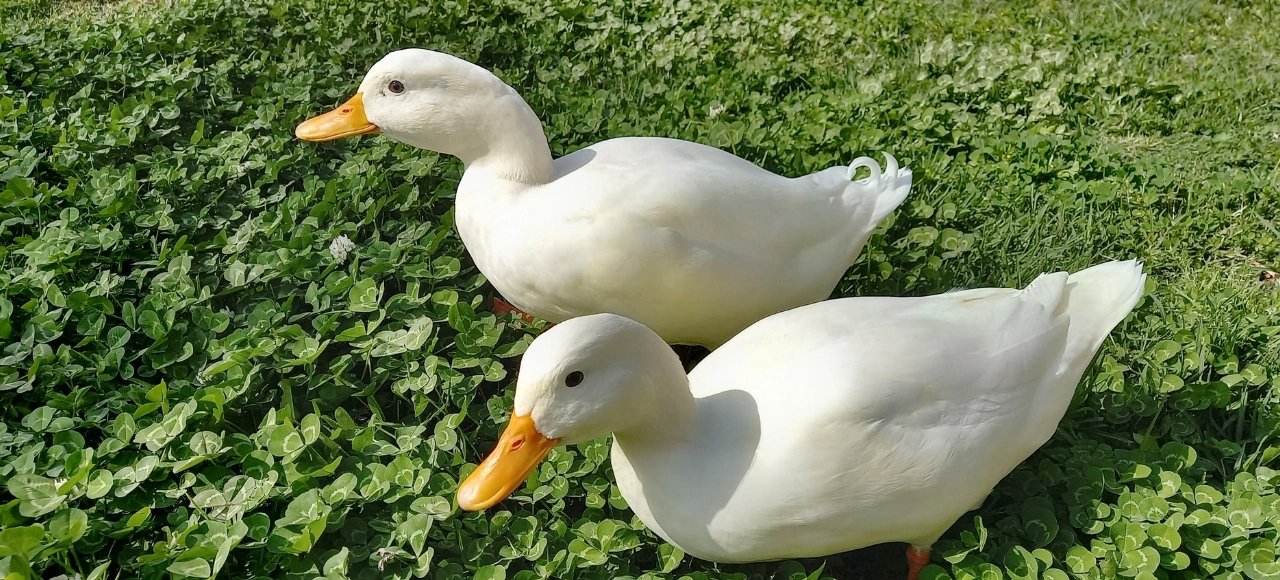
The easiest sign is the tail. Adult males (drakes) have one or two feathers curled upward at the end of their tail. Females have straight tail feathers.
Do male and female ducks sound different?
Yes. Females make the classic loud “quack” sound.
Males have a much softer, raspy, almost whisper-like voice.
ARE MALES BIGGER THAN FEMALES?
Usually yes. Males tend to be slightly larger with thicker necks and a broader head.
AT WHAT AGE CAN YOU SEE THE DIFFERENCE?
Around 4–5 months old, when the tail curl and voice become clear.
HOW MANY MALES SHOULD YOU KEEP?
Ideal ratio for a calm, productive group:
2 males for 8 females
WHAT HAPPENS IF YOU KEEP TOO MANY MALES?
Too many males cause: stress for the females – more noise – fighting – fewer eggs
CAN FEMALE DUCKS LAY EGGS WITHOUT A MALE?
Yes. Females lay eggs naturally, even without a male present.
Without a male, the eggs will not be fertilised.
DO MALES HELP WITH RAISING DUCKLINGS?
No. Female ducks do the nesting and care for the young.
Males usually stay nearby but do not help raise the ducklings.
Did you know?
DUCKS HAVE NO TEETH
Ducks don’t have teeth, but they do have small, serrated structures along their beaks that help them filter food from the water.
DUCKS CAN SEE
They can see almost 360° around them. Their eyes are positioned on the sides of their heads, giving them an extremely wide field of visio
DUCK WATERPROOFING
Ducks have highly waterproof feathers thanks to an intricate feather pattern and a wax-like coating that they spread onto their feathers while preening. The waxy oil is produced in their preen gland, a small gland at the base of their tail. Duck feathers are so waterproof that they can dive completely underwater and the downy under-feathers will stay totally dry.
DUCKS OF THE WORLD
Ducks live in both freshwater and ocean waters and can be found on every continent except for Antarctica. The Mallard duck is the most abundant and wide-ranging duck on Earth. They can be found in all parts of the Northern Hemisphere. The white Pekin duck is the most commonly raised domesticated duck breed.
DUCKS DON’T GET COLD FEET THANKS TO THEIR CIRCULATORY SYSTEM
Ducks have a special counter-current blood vessel system in their feet/legs so their feet will not feel cold. Their feet have a unique alignment of blood vessels, with veins and arteries lying next to each other & lace-like capillaries that weave among themselves. As warm blood comes down the legs from the body and meets the cooled blood coming back up, heat is exchanged in these special capillaries. This preserves a core temperature in the feet delivering just enough blood to feed the tissues & keep frostbite at bay. It also means that cold blood is not making its way back into the body, which could lower their core temperature. This lets them swim in icy water and be undisturbed by walking in snow & chilly puddles.
EXTREME MOLTING
Most bird species have a “sequential molt” where they lose their flight feathers one at a time, allowing them to always have the ability to fly. Most waterfowl have a “simultaneous wing molt” typically in spring or early summer, where they lose all their primary feathers at once. This means until they grow back (about 20-40 days) the bird can not fly. Luckily waterfowl are well adapted to flightless life by inhabiting wetlands where they can find food and shelter without the need for flying.
DRAKE MOLTING
Drakes will undergo the wing molt we just discussed above, but they also undergo twice-yearly molting of their plumage. Shortly after the females make their nest and the main breeding season is over, drakes will molt out of their colorful plumage. It is replaced with their “eclipse plumage” – drab, brown feathers similar to the female’s coloring. In fall/winter they will molt again, regaining their bright, colorful feathers known as their “nuptial plumage” in preparation for the next mating season. click here to learn more about duck molting
MATING
Drakes unfortunately have a reputation for very aggressive mating that can sometimes even result in injury or death. In some species of wild ducks, a female will bond with a male for one season – but she will still be harassed into mating by other males. The female can protect herself from insemination from an unwanted male with a long, complicated oviduct full of twists, turns & chambers. She can sideline sperm & eject it later so that she only reproduces with the male of her choosing.
SPEAKING OF MATING…..
Drakes are one of the few bird species that have an external phallus. It is a long, corkscrew shaped tentacle that retracts into their body when not mating – it can grow to be as long as their entire body! The most bizarre fact of all is that in the autumn the phallus completely falls off, only to regrow in the spring. Scientists are unsure why this happens. The length it regrows depends on how many rival males are in their area during mating season. The more rivals, the longer it might grow, to better their chances of fathering offspring.
DUCKS CAN CHANGE GENDERS
Gender change in ducks is rare, but happens as often as 1 in every 10,000 birds and can happen both from female to male and male to female, although female to male seems much more common. The cause is undetermined but some think it happens when an imbalance of genders in a flock occurs (a really large all-male or all-female flock) or due to disease or damage in the reproductive system.
When a male bird turns female, it will molt all of its colorful plumage and can develop the louder female quack and display nesting habits. There are stories about a once male duck laying eggs, but I have seen nothing scientifically conclusive. The female-to-male transformation seems to be studied a bit more. Female ducks that turn male will molt into the colorful male plumage including a drake curl tail feather, and can develop the raspy drake quake & drake mannerisms and could even fertilize eggs!
A biology-based explanation is that almost all female birds have two ovaries, but only the left one functions. The right ovary never develops beyond a clump of cells. If the left one becomes damaged, diseased, or for some reason shuts down by an instinct to balance the flock, the female bird is no longer producing oestrogen (the hormone in birds responsible for female characteristics). Sex chromosomes in birds are expressed as Z & W, with all birds “defaulting” to ZZ (male) and the presence of a W chromosome making a female. With no oestrogen being produced, the rudimentary right ovary actually begins to develop into a functioning testis, producing testosterone, leading to the normal male sex traits. click here to read about my female duck that has begun to show male traits
DUCKS TURN WHITE WITH AGE
White ducks are white their whole lives, but dark-colored ducks slowly develop white patches in their feathers as they age, just like humans developing grey hair. Eventually, when they are very old, they could become entirely white.
Why I Continue
There is something calming about this life. The rhythm, the routine, the small daily moments.
The ducks are not just part of my work – they are part of my days, my thoughts, even my conversations.
My little duck garden is a place of care, patience, and quiet joy.

Ibu Antje
I’m Ibu Antje; Founder, Owner and 'Chief of Magic' at The Lombok Lodge Hospitality®. With over 15 years of experience in luxury hospitality, I am passionate about creating meaningful and bespoke travel experiences across the breathtaking island of Lombok and the Gili Islands in Indonesia. My love for Lombok comes from the island’s breathtaking beauty, its rich traditions, and the warmth of its people. It inspires me every day to share this special place with others by creating meaningful and memorable experiences that allow guests to truly feel the spirit of Lombok and the Gili Islands. Follow my daily life in Lombok & Gili - and more things I adore - on Instagram @ibu.antje
Contact Ibu Antje